Another publication alert!

Find here the first piece of Daan’s PhD puzzle, published in Earth Surface Dynamics (and selected as a highlight paper)!

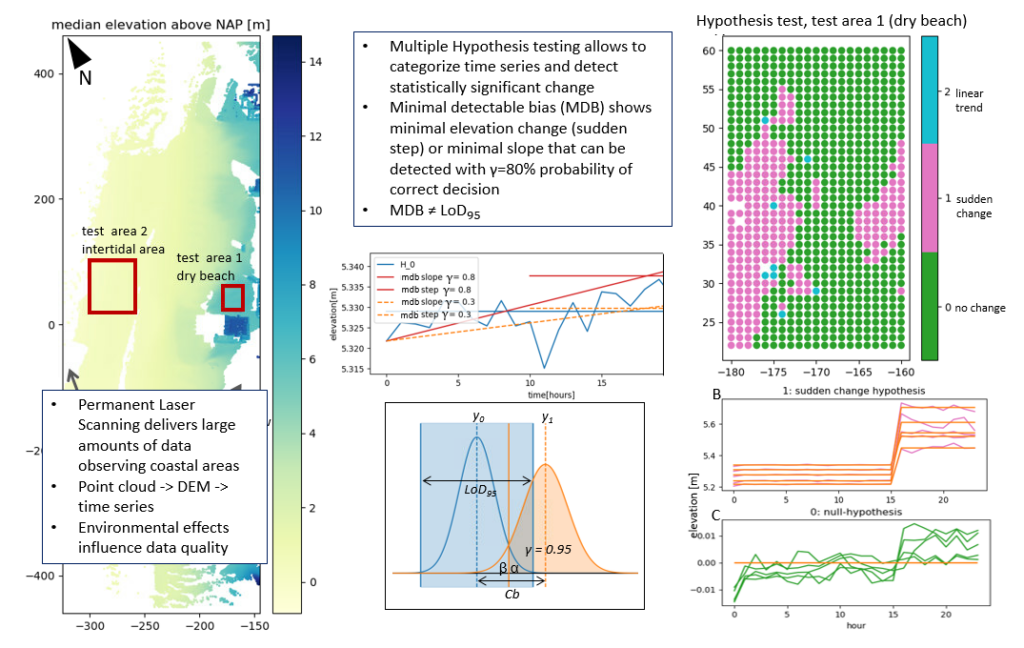
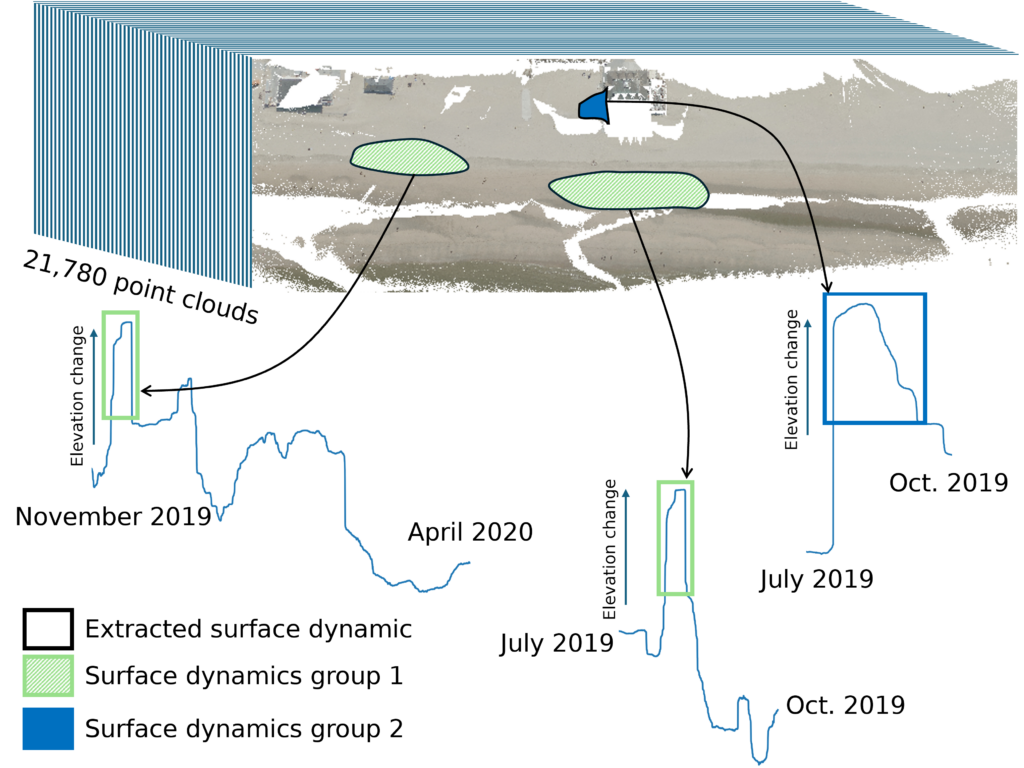
To understand the topography changes captured within three years of hourly 3D measurements of a sandy beach, we have worked on identifying repeating patterns of surface dynamics. Using 4D objects-by-change, Self-organizing Maps, and hierarchical clustering we reduced a set of over 20,000 hourly point clouds into 31 surface dynamics types. These range from berm depositions and storm-driven beach erosion, to excavators 🚜 moving sand in front of a beach pavilion đŸ–ïž

The workflow allows for investigation of seasonal and event-driven variations in beach dynamic response. This can help us better predict and understand the impact of various meteorologic, hydrodynamic, and even human factors on the morphology of the beach. Stay tuned for this data-driven prediction..

Hulskemper, D., Antolínez, J. A. Á., Lindenbergh, R., and Anders, K.: Coastal process understanding through automated identification of recurring surface dynamics in permanent laser scanning data of a sandy beach, Earth Surf. Dynam., 14, 329–359, https://doi.org/10.5194/esurf-14-329-2026, 2026.

Publication Alert! Conference proceedings of the Coastal Dynamics conference 2025

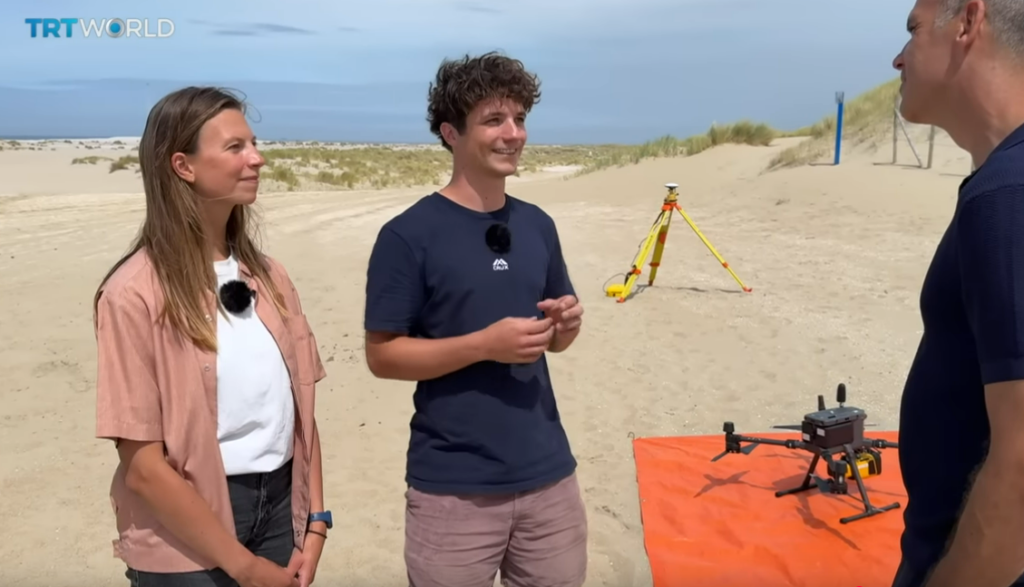
Last year Sander Vos and Daan Hulskemper presented part of their work for the AdaptCoast project at the Coastal Dynamics conference in Aveiro. The proceedings of this conference have now been published in Springer Nature:

Hulskemper, Daan, Katharina Anders, JosĂ© A. Á. AntolĂ­nez, and Roderik Lindenbergh. “Uncovering Causation of Short-Term Sandy Beach Surface Dynamics Measured by Permanent Laser Scanning.” In Coastal Dynamics 2025, vol. 42. Coastal Research Library. Springer Nature Switzerland, 2026. https://doi.org/10.1007/978-3-032-15477-4_51.

Vos, Sander, Daan Hulskemper, Christa IJzendoorn, Alain De Wulf, Roderik Lindenbergh, and JosĂ© A. A. Antolinez. “The Effect of Beach Buildings on Decadal Dune Volume Development.” In Coastal Dynamics 2025, vol. 41. Coastal Research Library. Springer Nature Switzerland, 2026. https://doi.org/10.1007/978-3-032-15473-6_26.

Publication Alert! The first review article on permanent laser scanning.

Permanent terrestrial laser scanning for near-continuous environmental observations: Systems, methods, challenges and applications

Full publication see here.

Authors

Roderik Lindenbergh, Katharina Anders, Mariana Campos, Daniel Czerwonka- Schröder, Bernhard Höfle, Mieke Kuschnerus, Eetu Puttonen, Rainer Prinz, Martin Rutzinger, Annelies Voordendag, Sander Vos

Highlights

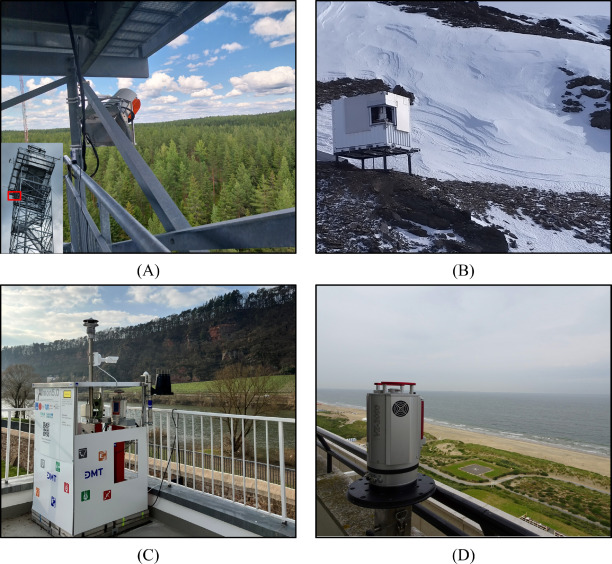
  • Review of permanent laser scanning, a sensor setup for near-continuous 3D monitoring
  • Discusses extraction of spatio-temporal information from massive 4D point cloud sets
  • Showcases recent permanent laser scanning setups in various environments

Two BSc theses on the extraction and classification of dynamic objects in the Noordwijk permanent laser scanning dataset

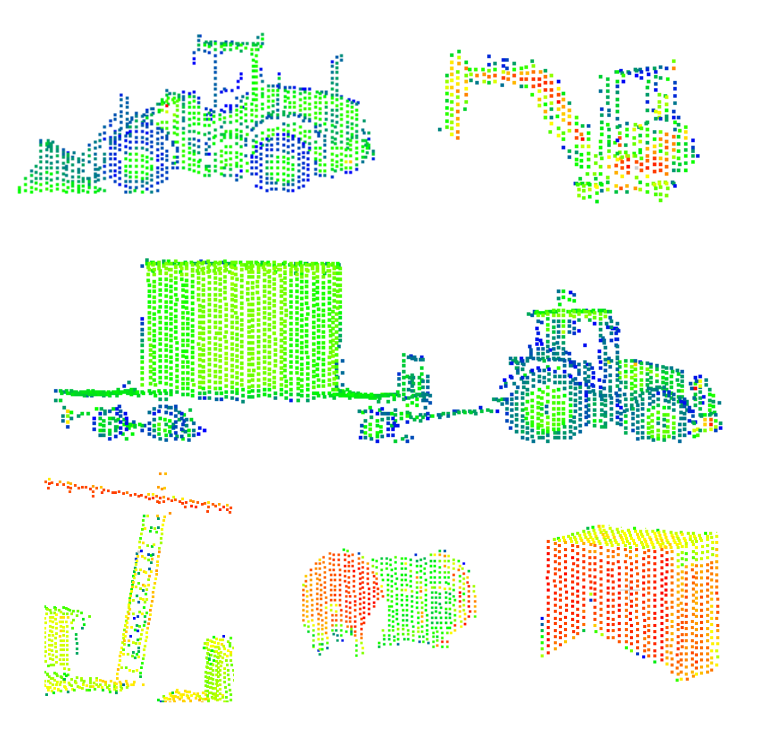
Large dynamic objects on the beach of Noordwijk, Mark Geerearts 2025

Students Sidi Liu and Mark Geeraerts finished their bachelor’s Applied Earth Sciences in great style. Both of them worked on the Noordwijk permanent laser scanning point clouds. Mark developed methods to automatically extract dynamic non-natural objects, like bulldozers, bikers, humans, and ladders, whereas Sidi worked on an automated way to classify these objects into bulldozers and others. Both of them obtained great results: more than 93% of the large dynamic objects (e.g., bulldozers) could be detected using Mark’s methods, and more 92.5% of these could be correctly classified by Sidi.
The theses can be found here:

Mark Geeraerts, “Identifying Dynamic Objects in Coastal Environments”, https://resolver.tudelft.nl/uuid:09e5b5c2-ef47-4c07-8630-c8487238ba6e

Sidi Liu, “Classifying Bulldozers and Large Dynamic Objects on Sandy Beach Using LiDAR Point Clouds”, https://resolver.tudelft.nl/uuid:0b4c8f0b-3274-4631-9ee3-d1e0aac0dabb


New PhD candidate on the AdaptCoast project

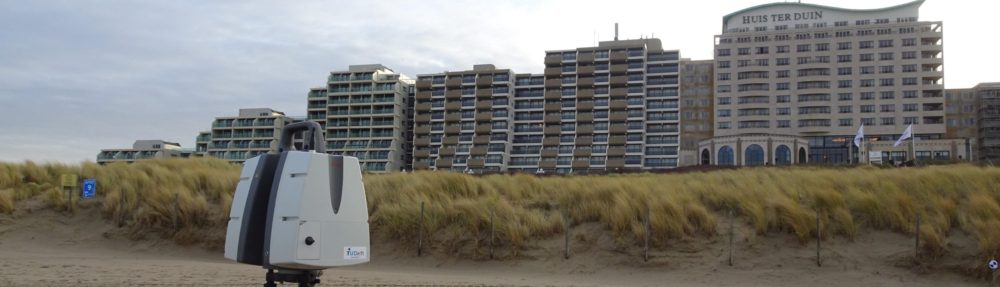
From the start of this year onward I, Daan Hulskemper, will be working on the AdaptCoast project as a PhD candidate at Delft University of Technology. My background lies in earth surface processes, and optical and laser remote sensing. After getting my Bachelor’s degree in Earth Sciences at Utrecht University, I did my Master’s at Delft University of Technology, in Geoscience and Remote Sensing. Here I graduated on the detection and classification of surface change dynamics in the point cloud time series acquired at Kijkduin (link). I look forward to further dive into this topic as part of my PhD journey.

My first duty as a PhD candidate will be to further explore methods for automated extraction and characterization of surface change dynamics from point cloud time series, acquired with the permanent laser scanner setups at the various CoastScan locations. Thus, expanding the knowledge and applicability of the data acquired as part of CoastScan. We will also enrich these datasets with LiDAR data acquired with a drone, and possibly other sources. Additionally, I will look into the prediction of topography changes under variations in human and natural forcing; exploring the causalities between the forcings and consequent short-term surface dynamics on the beach.